Letting Go of Weights, Calories, & Sizes in Eating Disorder Recovery
Most people that struggle with eating disorders place an enormous weight on the numbers.
Eating disorders cause us to obsess about how much we weigh, how many calories we are eating, and what our clothing size is. So much emphasis is placed on the numbers that we begin to base our worth on things like our weight and clothing size. We begin to believe that we are not worthy if we weigh more than “X” pounds or if we wear a bigger size than “X” in jeans.
Society has a lot to do with this. Society makes us believe that if we do not look a certain way–if we do not have the “perfect” body–we are not beautiful, or we have failed. We become so obsessed with achieving that “perfect” body that we forget that our eating disorders will NEVER tell us we have achieved that “perfect” body. Our eating disorders will never be satisfied.
We will never be skinny enough or curvy enough or good enough for our eating disorders. But, that doesn’t stop us from trying.
We weigh ourselves multiple times a day, and if we don’t weigh less than the last time we weighed ourselves, we restrict. We listen to our eating disorder voice when it tell us,
“Once you lose “X” pounds you will be happy.”
This is a lie. We will never be satisfied with ourselves, we will never be happy with ourselves, while living under the control and criticism of our eating disorders.
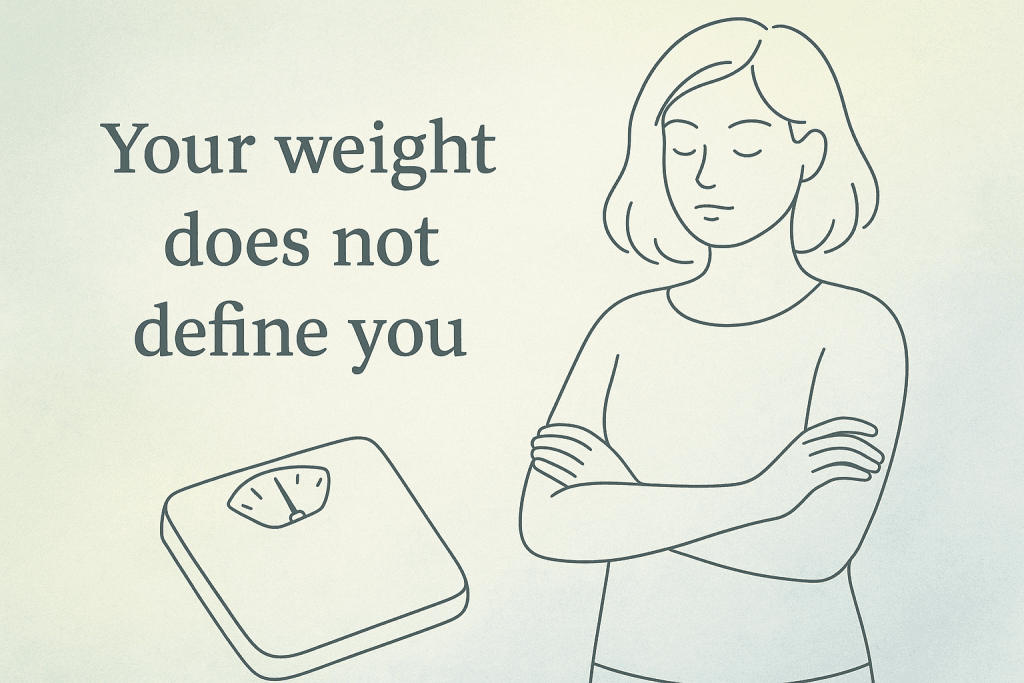
So, if we want to continue working to defeat our eating disorders once and for all, we have to begin DITCHING THE NUMBERS. This means recognizing that our weight does not define us, and recognizing that our clothing size does not define us. Realizing that what defines us, what makes us worthy, is on the inside–it comes from who we are.
We must recognize that calories, carbs, and sugars are not the enemy. They are simply numbers representing the nutritional value in certain foods. And all three–calories, carbs, and sugars–are necessary. We can eat whatever we want as long as we are listening to our bodies and eating when we are hungry, and stopping when we are full.
The number of calories we burn while exercising does not get to decide if we earned our dinner. Exercise or movement is a way to honor our bodies–it is not meant to be a punishment or compensation for eating something. It doesn’t matter how many calories were burned or how many minutes you walked–what matters is that your body feels good. That is body respect.
Some steps that you can take to start ditching the numbers are…
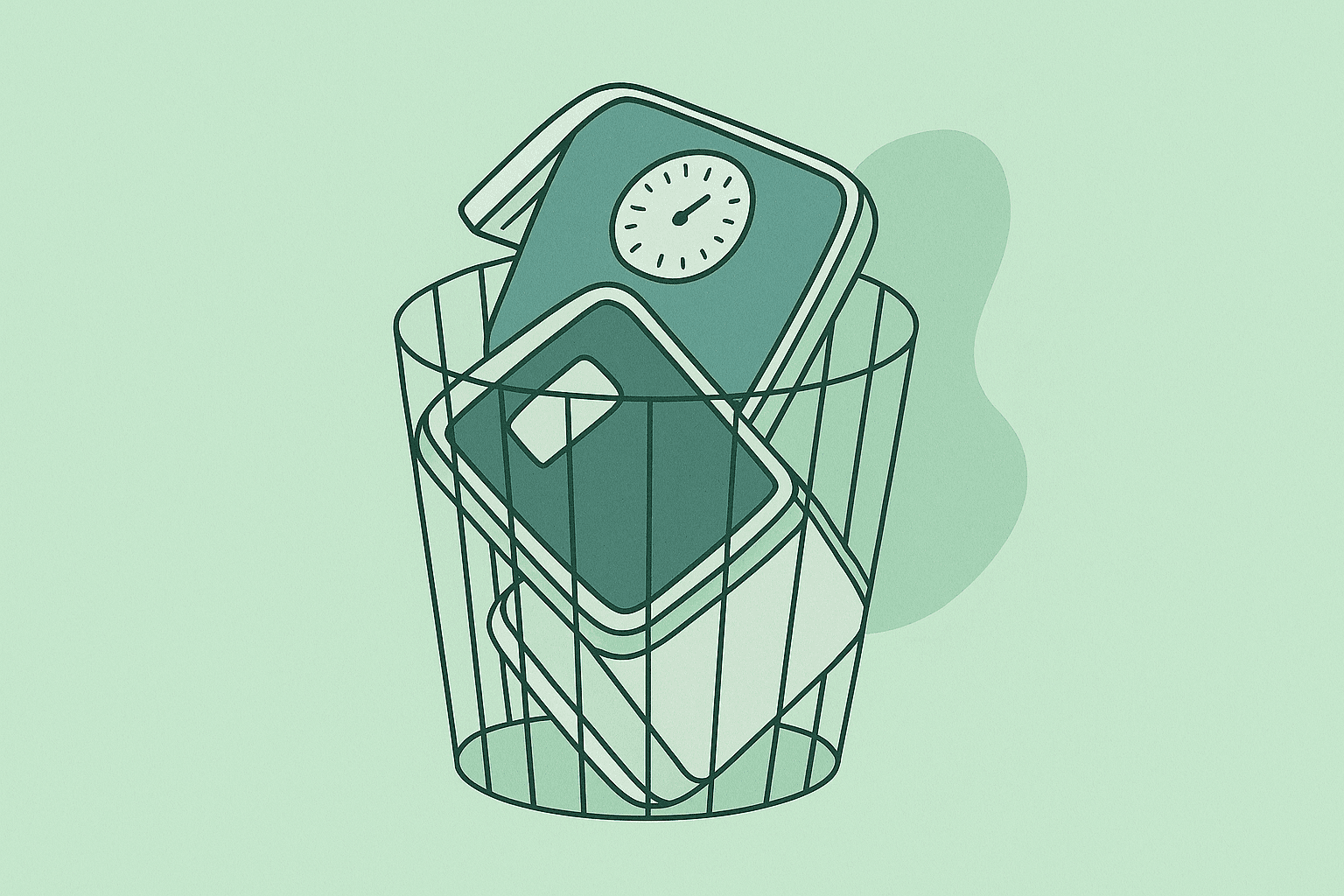
Throw out your scale! You do not need to know your weight. There is zero reason you need to know your weight–you can judge your health by how you feel physically and mentally. FAB’s Body Image Therapist, Morgan, went through her own eating disorder recovery and she said that throwing out her scale was one of the most helpful steps she took in her recovery–she has not weighed herself in about 8 years now. For years in eating disorder recovery whenever Morgan had to go to the doctor, she would take the proper precautions: she stepped on the scale backwards, informed the nurse that she has an eating disorder history, and asked the nurse to not say her weight out loud. Morgan says that the freedom she received after throwing out her scale was everything.
Remember your nutritional basics! Nowadays, a lot of restaurants put the calorie count right on the menu. It immediately strips away our confidence in choosing something to eat, as it is a big, huge number staring right at you, making your eating disorder voice go, “Oh, absolutely NOT!” Here, it is important to go back to the basics. Don’t focus on the nutrition facts. Don’t even look at them. Just remember this: If your meal or snack has a protein, a carb, and a fruit or vegetable, you are golden.
Move your body outside and without your Apple Watch! A lot of times, when we move our bodies at the gym, we focus on the amount of calories the treadmill says we have burned or the amount of minutes we have spent on the elliptical. And, while Apple Watches are great in certain ways, they are not so great in eating disorder recovery as they focus on calories and exercise time as well. So! We are encouraging you to move your body outside and without your watch. This will allow you to truly listen to your body–to move your body for however long it wants to move. Your body’s signs are your only guides. Try it, you might love the freedom you find. 🙂
Buy clothes that fit your body as it is now! Your body might change through your recovery. Some of your clothes might fit tighter or looser now. And as we will discuss in the next lesson, this is okay. You are finally nourishing and moving your body in a healthy, loving way, so it is only natural for your body to adjust to its natural weight. So, instead of continually trying on your ED clothes and feeling not-so-good feelings, buy new clothes that fit you now. If you have to go up a size, the world will not end. You will only feel better and more confident in your clothes. Remember–clothes are meant to fit you; you are not meant to fit into clothes.
FAB’s Body Image Therapist, Morgan, can help you begin to ditch the numbers once and for all. If you are thinking of trying therapy or are wanting to take the next step in healing your relationship with your body, take the TEST on FAB’s website and schedule your consultation with Dr. Jen, FAB’s Founder and Eating Disorder Therapist and specialist!